Source
Source: Plain-language digest of Identification and Mentoring Gifted Children Age 3–15 Years (with special focus on Maths and Science) (NIAS Report R37-2016), by Anitha Kurup, Jyothi Sarma, Ajith Basu, and Ajay Chandra. Published by the National Institute of Advanced Studies (NIAS), Bengaluru.
Read the report: PDF on NIAS ePrints
Programme home: NIAS — Education for the Gifted and Talented (EGT)
Also see: NIAS-EGT on GiftedKids.in
Further reading: NIAS ePrints record · Agastya International Foundation
GiftedKids.in is not NIAS. We share this research so Indian parents and teachers can use it. Words below are a plain-language digest, not a substitute for the full report.
Opening
India has worked hard to get more children into school. The Right to Education Act is one example. But “all children in school” is not the same as “every child’s mind is noticed.”
A large NIAS-led national project—backed by the Office of the Principal Scientific Adviser to the Government of India—asked a practical question: how do we find children with exceptional potential in maths and science between ages 3 and 15, and how do we mentor them once we find them?
The 2016 report brings together three Indian approaches:
- NIAS (Bengaluru) — tools grounded in classroom observation, parent/teacher nominations, and case profiles
- Delhi University — urban schools, multi-stage screening, and university-linked mentoring
- Agastya International Foundation — rural outreach, hands-on science exposure, and enrichment camps
Together they make one clear point for parents and teachers: giftedness in India cannot be spotted by exam marks alone, and one single test will not fit every child.
Example (illustrative)
Composite vignette — not a real child from the NIAS report.
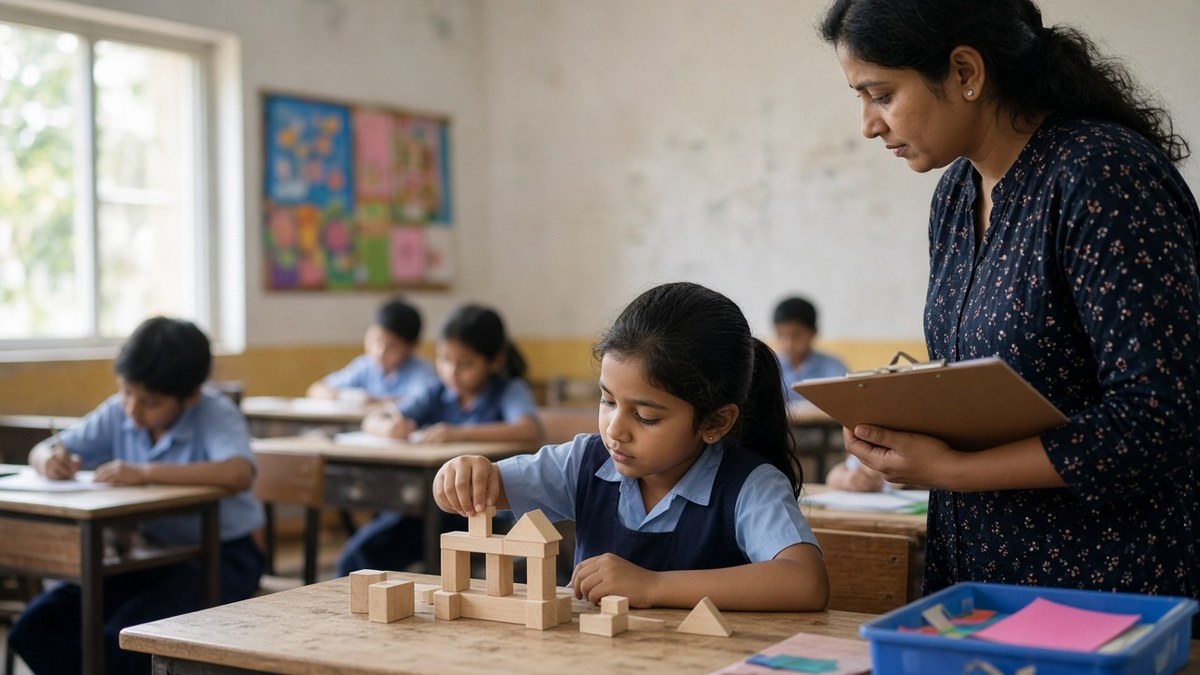
In a Class 3 CBSE classroom, Meera finishes the worksheet while half the class is still on question two. She is not disruptive — she quietly redraws the science diagram “the way it would work better,” then asks why the textbook version stops there. On the report card she is “good.” At home the same evening she rebuilds the experiment with kitchen bowls. A marks-only lens sees compliance; observation sees potential.
Why this matters at home and in class
The report uses a widely cited idea of giftedness: children whose natural abilities in at least one domain place them roughly in the top ~3% of age peers. On that scale, India may have millions of such children among school-age cohorts.
Without challenge and mentoring, that potential can fade into boredom, underachievement, or quiet withdrawal. Equity and excellence are not opposites—the report argues India loses when we treat them as enemies.
Example (illustrative)
Composite vignette — not a real child from the NIAS report.
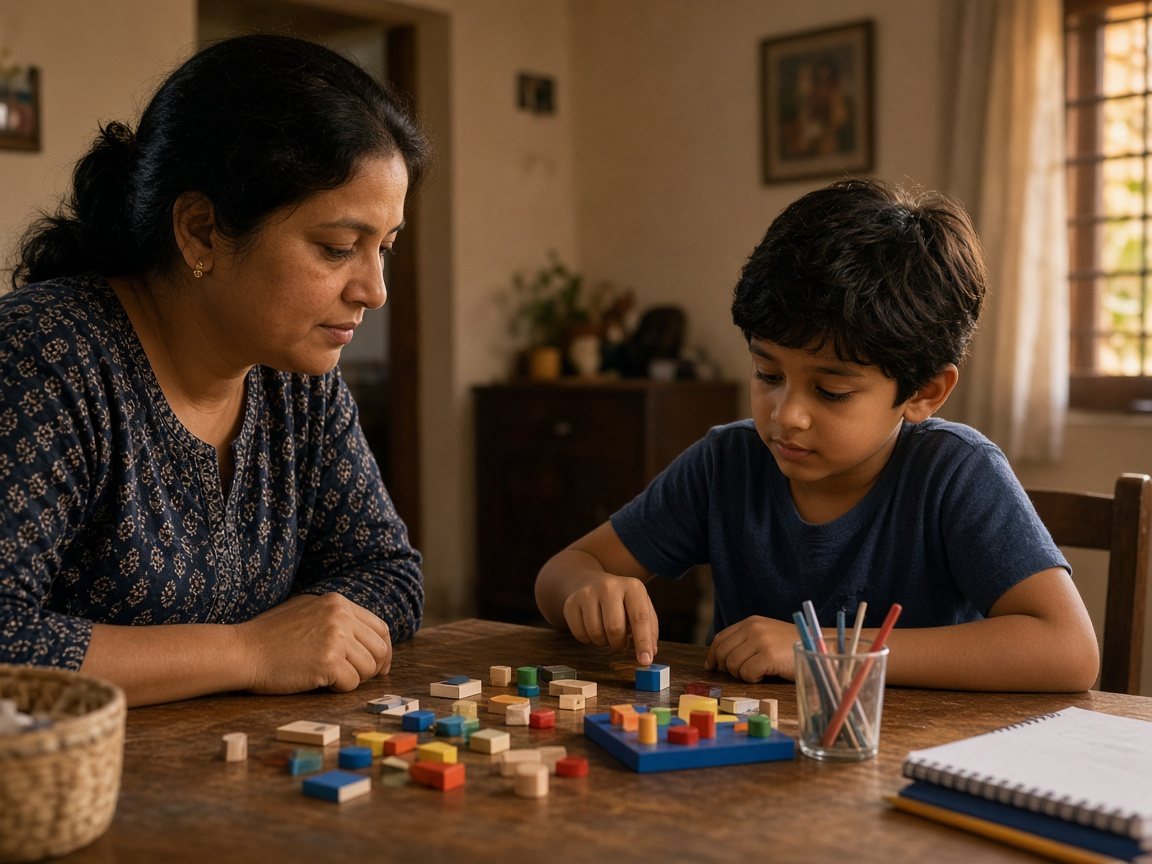
Rohan’s teacher never flags him: he is quiet, middling in tests, first-generation learner. At dinner he asks why trains lean on curves, then sketches forces on a napkin until midnight. His father thinks he is “just curious.” Under NIAS-style thinking, that home curiosity is exactly what parent nomination and case profiles are meant to catch — before boredom turns into “not trying.”
Three Indian models, one shared idea
NIAS model (three levels)
Teacher and parent behavioural nomination scales → psychometric screening (general ability + creative thinking) → rich case profiles, plus mentoring, teacher workshops, and holiday programmes.
Delhi model (three tiers)
Referral (observation + teacher/peer/self nomination) → selection (science & maths ability measures) → scaffolding through sustained mentoring (including Saturday university outreach sessions). In one reported cycle, tens of thousands of children were screened down to a small highly gifted mentoring group.
Agastya model (rural)
Teacher, peer, and community nominations; science-fair and related pathways; campus lab exposure and hands-on projects; multi-stage screening. Mentoring followed identification, including residential enrichment.
India’s diversity was treated as a design requirement: different populations need different identification paths.
What parents and teachers should take away
- Look for behaviours over time, not one lucky test day.
- Ask who is curious, persistent, and deep—not only who scores highest.
- Remember rural and first-generation learners are often missed by urban exam pipelines (NTSE, Olympiads, KVPY-type programmes help some children, but reach is uneven).
- Mentoring is not a luxury add-on; the report treats it as part of identification itself.