Source
Source: Plain-language digest of Identification and Mentoring Gifted Children Age 3–15 Years (with special focus on Maths and Science) (NIAS Report R37-2016), by Anitha Kurup, Jyothi Sarma, Ajith Basu, and Ajay Chandra. Published by the National Institute of Advanced Studies (NIAS), Bengaluru.
Read the report: PDF on NIAS ePrints
Programme home: NIAS — Education for the Gifted and Talented (EGT)
Also see: NIAS-EGT on GiftedKids.in
Further reading: NIAS ePrints record · Agastya International Foundation
GiftedKids.in is not NIAS. We share this research so Indian parents and teachers can use it. Words below are a plain-language digest, not a substitute for the full report.
Identification without mentoring is unfinished work
The report’s title pairs two words on purpose: identification and mentoring. Spotting a gifted child and then leaving them in an unchallenging routine is how potential turns into underachievement.
Delhi’s chapter puts it plainly for schools and families: gifted children need intellectually challenging environments and long-term, committed mentors—people who respect individuality and stretch thinking. “Catch them young” only helps if someone stays with them afterward.
Example (illustrative)
Composite vignette — not a real child from the NIAS report.
After a science fair, Ishaan is labelled “gifted” at school. For three months nothing changes — same worksheets, same pace. He stops raising his hand. Then a Saturday mentoring circle (the kind Delhi’s outreach modelled) gives him three hours with an engineer who treats his questions as serious. He comes home exhausted and happy. Identification without a next adult is a certificate, not a path.
What mentoring looked like in the three projects
NIAS
Alongside tools and case profiles, NIAS aimed to build a mentors network, sensitise parents, train teachers, and run weekend / summer / winter workshops. Mentoring was designed as a system: mentor–mentee interaction, resource sharing among families and organisations, and public awareness—not a one-off pep talk.
Delhi University
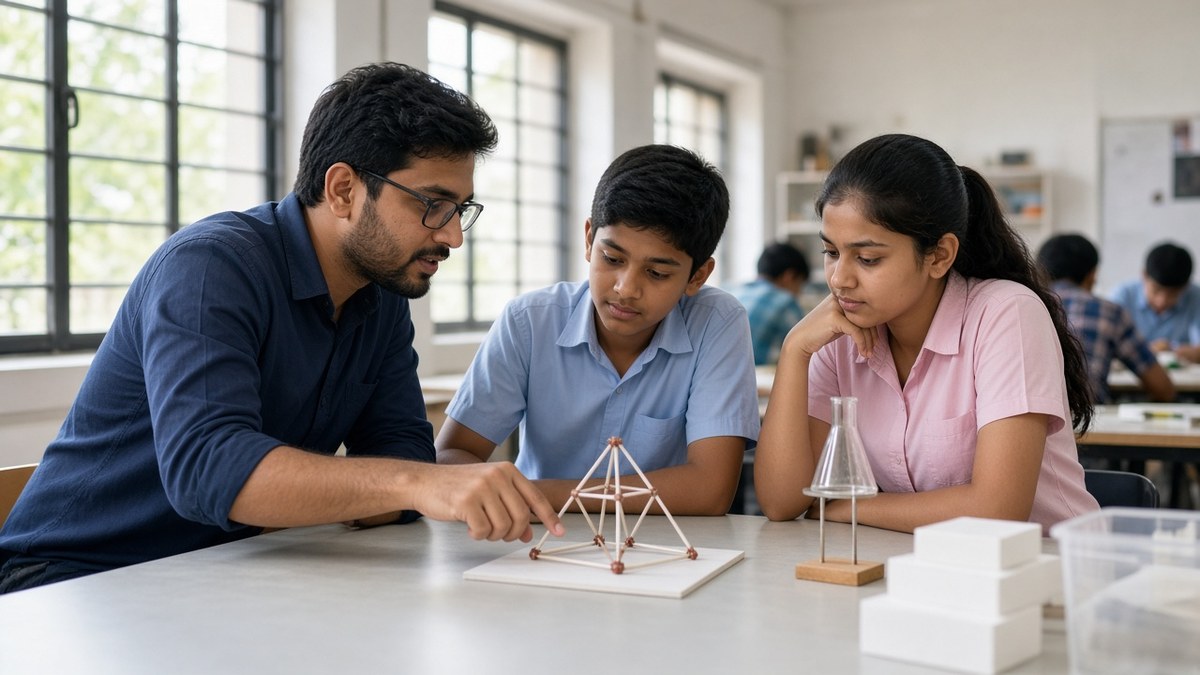
After multi-stage screening, identified students joined a University Outreach Mentoring Program with support from the Cluster Innovation Center at the University of Delhi. Students came on Saturdays for day-long sessions designed by faculty: constructing maths concepts, investigating science, arguing ideas, practising divergent thinking. Mentors later recommended a smaller set of students for still deeper mentoring.
The message for urban schools: link school talent to university minds so boundaries between school and higher education soften for the child’s growth.
Agastya International Foundation
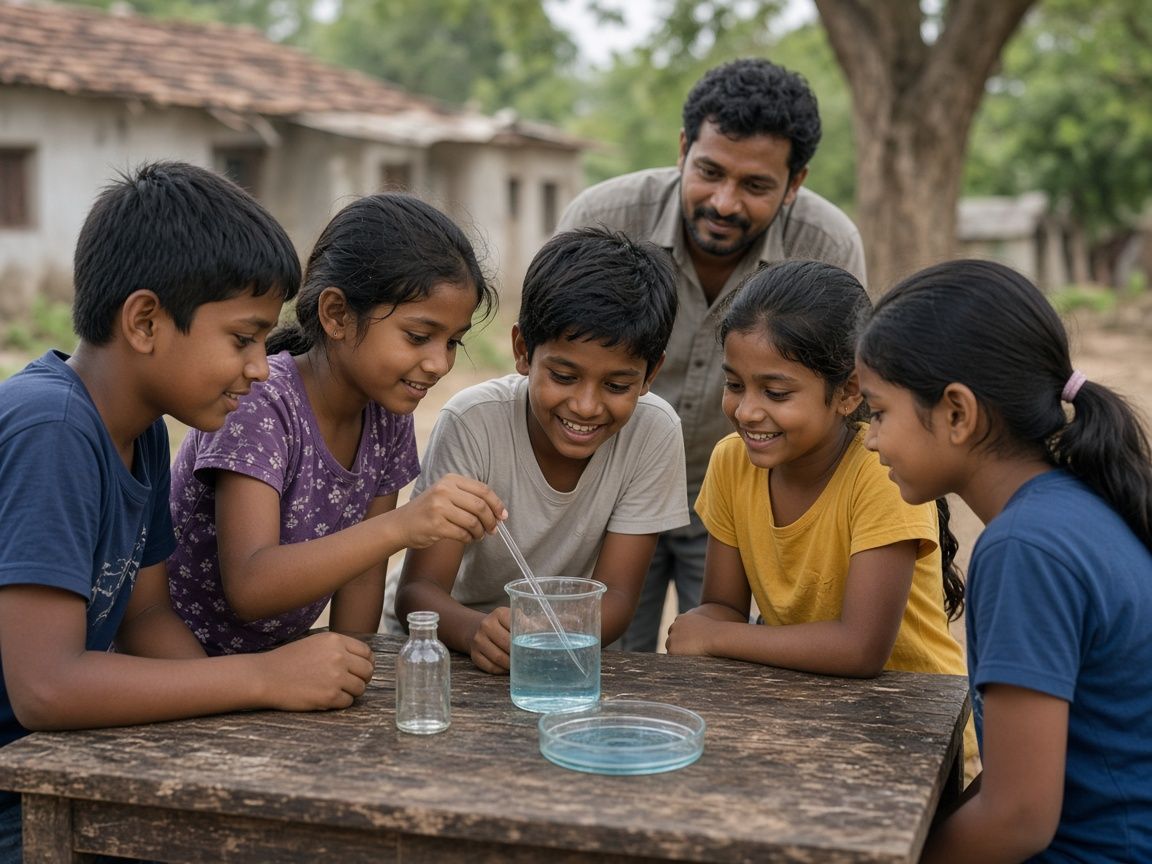
In rural pathways, identification through nominations and hands-on science exposure was followed by enrichment. Agastya ran a multi-day enrichment / mentorship camp aimed at self-learning: explore, research, discover, apply. Their recommendation was practical for India’s geography: keep children in their communities, but offer accelerated enrichment blocks (for example, sessions of a few weeks, once or twice a year) so they meet peers like themselves and return to school with fuel, not isolation.
Example (illustrative)
Composite vignette — not a real child from the NIAS report.
Priya returns from a week-long science camp where she finally sat with peers who also ask “what if.” Back in her village school she is still the only one finishing early — but she now has a notebook of experiments and a mentor’s letter her teacher can use. The camp did not replace school; it gave her a peer mirror and a next challenge, which is what Agastya-style enrichment is for.
Why this helps parents and teachers
Mentoring in this research sense is not “extra tuition for the next exam.” It is:
- Time with adults who can go deeper than the textbook
- Peers who also think fast or ask hard questions
- Permission to question, experiment, and argue
- Continuity—months and years, not a single workshop certificate
Without that, even correctly identified children can lose zest for excellence.
Small steps you can try now
At home
Find one adult (relative, teacher, scientist, engineer, artist, coder) who will meet your child regularly around a shared interest—not to finish homework, but to explore.
At school
Ask for enrichment that is not only more worksheets: science clubs, olympiad thinking (not only drills), project time, peer grouping for advanced tasks, or partnership with a local college/NGO.
In rural or low-resource settings
Agastya’s logic still applies: short, intense enrichment away from daily constraints can matter more than waiting for a perfect local programme that never arrives.