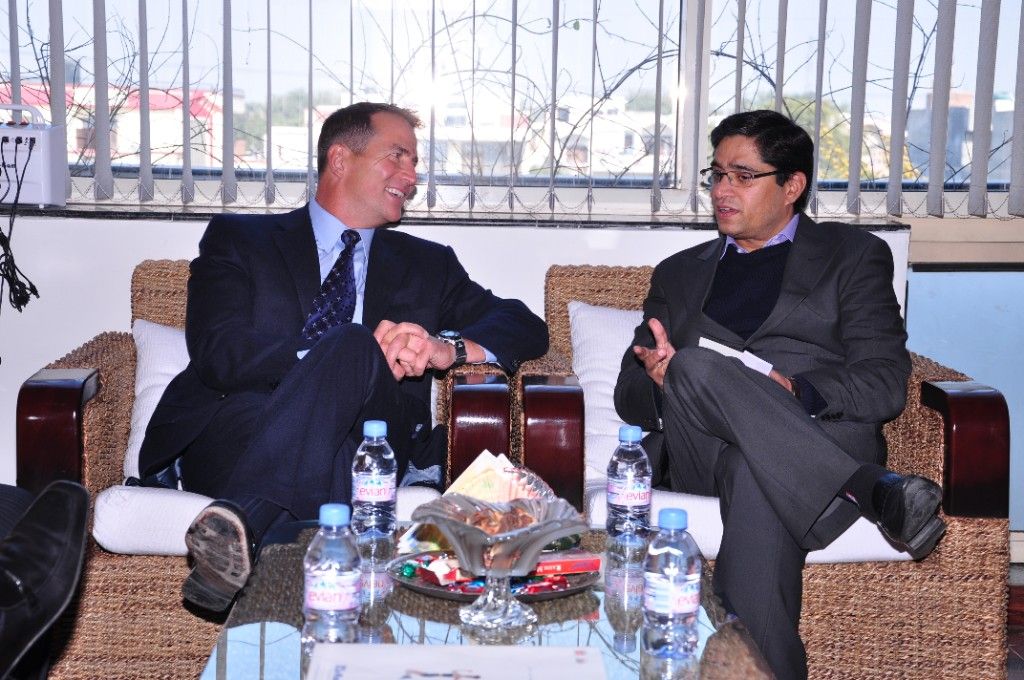
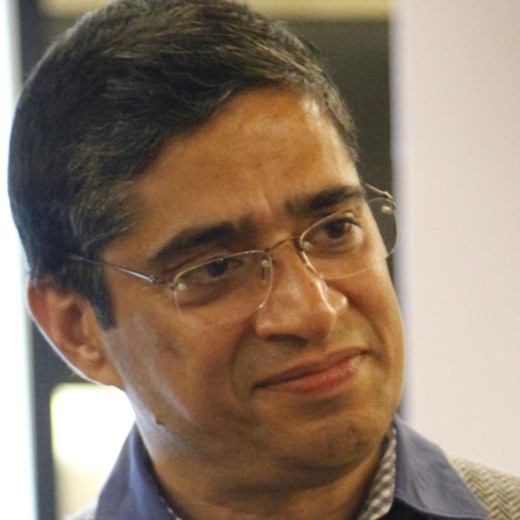
I studied in a government school in Punjabi Bagh, Delhi. I failed Physics. I had to repeat 12th standard. Not once did a teacher take me aside and say, "this boy simply thinks differently." I grew up in a home where no one saw my mind for what it was — and I carried that confusion for decades.

Today I am 63. I worked with my brother for a while, and then I built Su-Kam Power Systems from nothing, teaching myself electronics step by step. People call me the Inverter Man of India. I have trained thousands of people. I have built a whole industry.

And yet, I did not know I was gifted until I was 47 years old.

The Boredom No One Understood

I was always bored in school. Not ordinary boredom — a deep, restless ache. My legs wanted to move. My mind wanted to be somewhere else. I could not memorise dates. I could not sit still through a history lesson about battles from centuries ago. I thought something was wrong with me.

My teachers thought so too. The PT teacher kept a stick for boys who came late. The chemistry teacher made us squat and hold our ears for unfinished homework. I learned very early that school was not a place to be curious. It was a place to obey.

What no one understood — what even I did not understand — was this: I was bored because I was ahead, not behind. My mind did not want to memorise. It wanted to understand. It wanted to take things apart and see how they worked. When I was ten, I opened up a radio just to find where the music came from. I could not put it back together, so I hid the broken pieces. I was not being naughty. I was being curious. But back then, curiosity itself was treated as a problem.

I once won first prize in the Shankar's Children Art Competition. I still have that certificate. When I brought it home, my mother said nothing. I stopped drawing after that — not by choice. When no one sees what you make, you quietly stop making anything.

I repeated 12th standard. I left the family business. After the age of 18, I made every big decision alone, because there was no one whose advice I trusted. People called me stubborn. Difficult. Too much.

I was not too much. I was simply wired differently. And no one had a word for it.

Building, Without Knowing What I Was

I built Su-Kam with no plan, no investors, and no expert help. I hired freshers and people from completely different fields — because I could see something in them that their resumes could not show. I taught myself research and design by buying one machine and experimenting with it for two years. I often knew which product to build next before the market even knew it wanted one.

I held dealer meetings with whole families — wives and children too — because I understood that a happy family makes a loyal partner. I made a TV show called Sales Ka Bazigar to find sales talent that no MBA was producing. I built a moving demonstration van and called it Power On Wheels.

None of this came from a textbook. It came from a mind that throws up three or four answers at once and cannot stop learning. I had no name for that back then. I simply did it.

But the same mind that built a company also left me blind in ways I did not see. I stayed in a marriage that was breaking me for twenty years — because my mind is trained to believe every problem has a solution if you only think hard enough. Some things in life are not problems to be solved. I did not understand that then.

The Book That Gave It a Name

At 47, I read a book called Gifted Grownups by Marylou Kelly Streznewski. For the first time in my life, I cried. Not from sadness — but because, at last, I felt seen.

What being gifted actually feels like, from the inside

My mind throws up three or four answers in an instant. I feel restless and low if I do not learn something new each day. I am never quite happy with what I achieve — I always see the gap between what I did and what I could have done. Parties feel empty until I find one person who likes to think deeply. I can sit for hours on something that interests me and forget to eat. This is not a quirk of personality. This is simply how my brain is built.

I am 63 now. I am learning about AI. I watch history videos on YouTube — the very subject I hated in school. I read about the Second World War. I cannot stop learning, because my brain does not know how to stop. That is not a hobby. That is who I am.

What a Gifted Mind Does Well

I want to say this clearly, because in India the conversation about giftedness is almost always about the pain — the boredom, the feeling of not fitting in, the wasted potential. All of that is real. But it is only half the story.

A gifted mind has real strengths. You notice patterns in numbers and facts that others simply miss — not because you are better at everything, but because your mind goes deeper. Something is wrong in the accounts, and you feel it before you can explain it. A business plan has a hole in it, and you see it while everyone else is still nodding along. This is not pride. It is just a different way of seeing.

The gut feeling is real — and surprisingly accurate. Gifted people often sense where something is heading long before it becomes clear to others. I have made choices that looked strange to everyone around me, and time proved them right. I did not always know why I was so sure. I just was.

There is also an ease with people that surprises others. A gifted person can walk into any room and talk happily with anyone, of any age — because the mind is always reaching for depth, and depth has no age. Gifted children are often called "old souls." They get along better with adults than with children their own age, because the conversation feels richer. And when two gifted people meet, they recognise each other almost at once.

Gifted children also learn new things at amazing speed — a game, an instrument, a sport. But here is what no one warns parents about: once they have learned it well enough to satisfy themselves, the interest fades and they move on. It looks like giving up. It is not. Their mind has taken what it needed and is ready for the next thing. Unless someone understands that this is the brain's natural rhythm — not laziness, not flakiness — these children grow up being told they never finish what they start.

The inner critic that never rests

Here is something gifted people are rarely told: the voice inside is brutally hard on them. You are never happy with your own work, because your mind always sees how it could have been better. You win an award and at once think of what you could have done differently. You close a deal and already see the stronger pitch you could have made. This is not low confidence — it is impossibly high standards, turned on yourself before anyone else gets the chance. So when criticism comes from outside, it stings sharply — because you had already said it to yourself first. In time, most gifted people learn which criticism to keep and which to let go. But that takes years. It begins with simply understanding why the hurt is so strong.

How a gifted child is seen matters more than most people realise — and it starts very young. The way the adults around them describe them slowly becomes the way they see themselves, often for life. A child told they are too much, too difficult, too sensitive will carry that story forever. A child who is told the truth — "your brain works this way, and that is why" — grows up on solid ground. That is all this platform is trying to do: give the child the right word early enough to matter.

My Son, and a Word Our Schools Don't Yet Have

My son goes to one of the finest private schools in India — caring, well-trained teachers and a modern syllabus. And yet, when I first brought up the idea of giftedness, it simply wasn't a familiar word there. Let me be clear: this is no blame on his school or his teachers, who do truly good work. The gap is far bigger than any one school.

Sit with that for a moment. If giftedness is still a new idea even in our best schools, it is because our whole education system was never built around it. The system knows how to spot the topper and the troublemaker. It does not yet know how to see the child who already knows the answer, finishes in ten minutes and then drifts away, or questions the textbook because something in it does not add up.

And if the idea is barely known in our most privileged schools, it is almost invisible everywhere else — in government schools, in small-town classrooms, in rooms where one teacher is managing sixty children and has no time to notice the bored child in the third row.

That child was me. That child may be yours. And that child deserves far better than I got.

Why We Are Building This

I have the tools of modern technology. I have spent a lifetime building companies from nothing. And I have a story no expert can borrow — because I lived it, from a government school, to losing it all, to finding the word at 47, to rebuilding at 63. Most of all, I have a reason.

GiftedKids.in is India's first platform made for gifted children, advocacy, and community — built for Indian homes and schools, not borrowed from the West. It stands on four simple ideas: helping parents and teachers spot giftedness without Western IQ tests; giving parents the words and tools to stand up for their child in a rigid school system; connecting families to scholarships, programmes, and mentors; and building a community where parents, teachers, and gifted adults finally share a language for what they feel.

It is not a test. It is not a coaching centre. It is a movement.

If you are reading this and you see yourself in it — the boredom, the intensity, the hunger that never ends, the feeling of being "too much" — you are not broken. You are gifted. And you are not alone. This platform is for you. And it is for your child.

I started this — but I am not doing it alone. I am proud to be building GiftedKids.in with two co-founders who share the dream: Khushboo Sachdev, Founder & CEO of Su-vastika Systems, and Dr. Inderbir Kaur Sandhu, a Cambridge-trained gifted-education specialist who keeps everything we do grounded in real evidence. Together, we are turning an idea I carried for years into something real. And we are still building — if you see the same gap we see, write to me.

And to everyone else — welcome. You found us early. Help us build this.

The One Thing Gifted People Get Wrong About Themselves

There is a quiet trap that gifted people fall into, and almost none of them see it coming. They believe they have grown past their emotions. They have thought about their feelings deeply. They can explain exactly what they feel and why, with great clarity.

But understanding a feeling is not the same as handling it. Gifted people often mistake one for the other. They can name the emotion, trace it, explain it to others. What they often cannot do is feel it less strongly, or react less quickly, or let it pass without it taking over.

The intensity does not fade with age or self-awareness. What changes is the story you tell yourself. You begin to say "I have dealt with this," when what you really mean is "I have understood this." The feeling is still there. The reaction is still there. You have only learned to hide it better, or explain it away faster.

This is so important to know — for yourself, and for your child. When a gifted child says, "I don't care what anyone thinks of me," watch closely. Because the gifted person who says they do not care is usually the one who cares the most. Standing at a distance from a feeling is not the same as being at peace with it. It only looks that way from the outside.

A note to the gifted grown-up reading this

You may have spent years feeling different without knowing why. The boredom that was never laziness. The intensity others found tiring. The gut feelings that kept turning out right. The inner critic that never gave you a moment's rest. The hunger to learn that never ends. You are not too much. You were simply never named. This platform is for your children — and it is also for you. The gifted-adult section is coming. You will find yourself in it.

— Kunwer Sachdev, Founder, GiftedKids.in | June 2026