New to giftedness? Start with the clinical framework.
This is a personal essay. For Dr Inderbir Kaur Sandhu's comprehensive guide to the signs of giftedness in Indian children, testing considerations, and links to observation research, visit our identification hub.
The short answer
Look at how your child's mind works, not at their marks. A gifted child lives a little in their own world — always thinking, noticing tiny things others walk past, and answering in a way that feels deeper than their age. They lock onto one or two interests and stay there for hours, and switch off from everything else. And they expect their own work to be perfect. In India we measure only marks, so most gifted children go completely unseen.
Almost every Indian parent has wondered it quietly: is my child gifted, or am I just a proud parent? It is a fair question. And the honest answer is that you usually cannot find it on a report card. Giftedness is not the same as good marks. It is a different way of thinking — deeper, more intense, more curious — and it shows up in small everyday moments long before any exam.
Here are the signs I have seen, both in the research and in my own home.
The signs of a gifted child — in an Indian home
- They live in their own world. Always thinking, often somewhere else in their head. You call their name twice before they hear you.
- They notice the tiny things. A small detail in a picture, a change in your tone, a number on a gate — things the rest of us never register.
- They talk differently. Their answers are not the usual child answers. They are deeper, more original, sometimes startling for their age.
- Their logic sharpens by the day. They argue like little adults, catch the hole in your reasoning, and point out the faults in others — sometimes uncomfortably well. (More on this in The Critic Within.)
- They go all-in on one or two things. A single deep interest they return to again and again — and very little patience for anything outside it.
- They can focus for hours. Real, still, absorbed focus on the thing they love, long past when other children would have got up and run away.
- They ask "why" and "how" endlessly. Your answer does not end the conversation. It opens ten more questions.
- They learn it after seeing it once. And then they hate repeating it. "Revision" and rote drilling bore them quickly.
- They remember odd, specific things. Dialogues, number plates, train timings, the page where a fact was written — even while insisting "I can't mug up."
- They feel everything strongly. Big empathy, sudden anger, deep hurt over unfairness. The world reaches them louder than it reaches others.
- A sensitive body, from the very start. Scratchy clothing tags, woollen or synthetic fabrics that itch or even bring on rashes, loud sounds, certain smells or foods. Their skin and senses are turned up louder than everyone else's — often from infancy. (More on this in The Tag in the Shirt.)
- They ask the big questions early. Death, God, infinity, "why are some people poor?" — long before you are ready for them.
- They want it perfect. And melt down when it isn't — because they can already see how good it should have been.
- They guard their image fiercely. Discuss them negatively in front of outsiders — even gently — and they take it as a betrayal. Even very young, they feel the sting of being "shown down" before others, and they get upset over what looks like a very small thing.
- They know exactly what they want — and how to get it. Very young, they bargain, negotiate, and yes, "emotionally blackmail" you to get their way. It can be exhausting — but underneath it is a strategic little mind reading cause, effect, and the people around it long before other children do.
- They run on a bigger battery. High energy, playing and going strong all day — and often needing noticeably less sleep than other children their age. Their bodies seem to keep pace with their restless minds.
You will not see all sixteen in one child. But if you are reading this nodding at five or six of them, pay attention. Something real is there.
From my own home
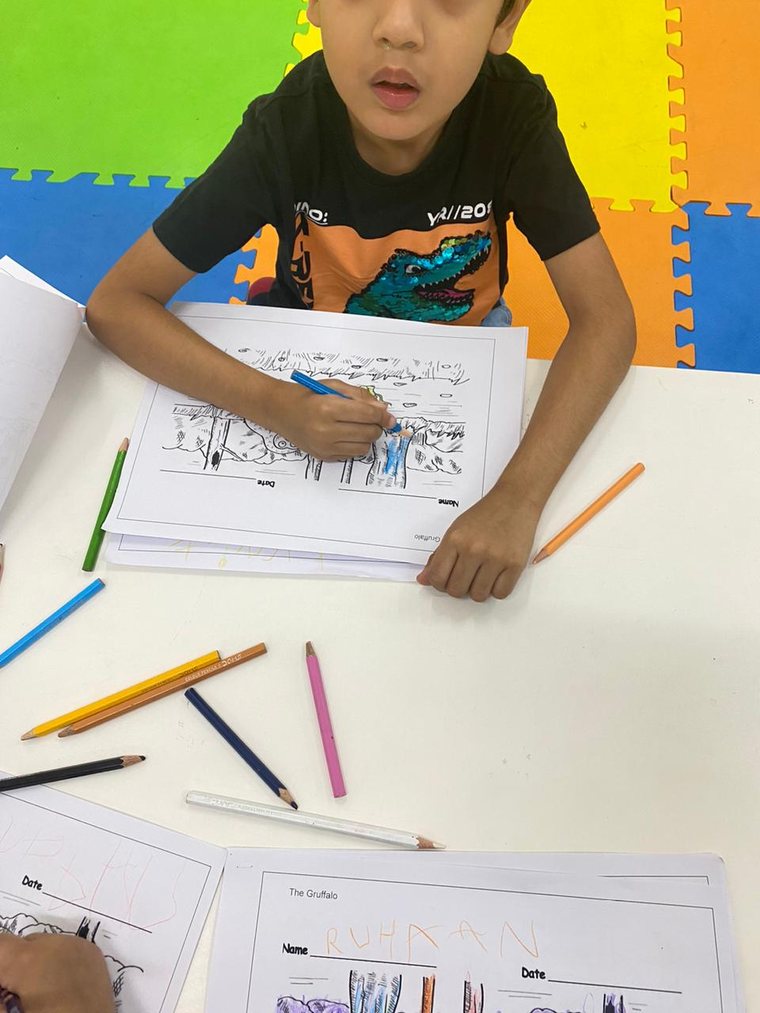
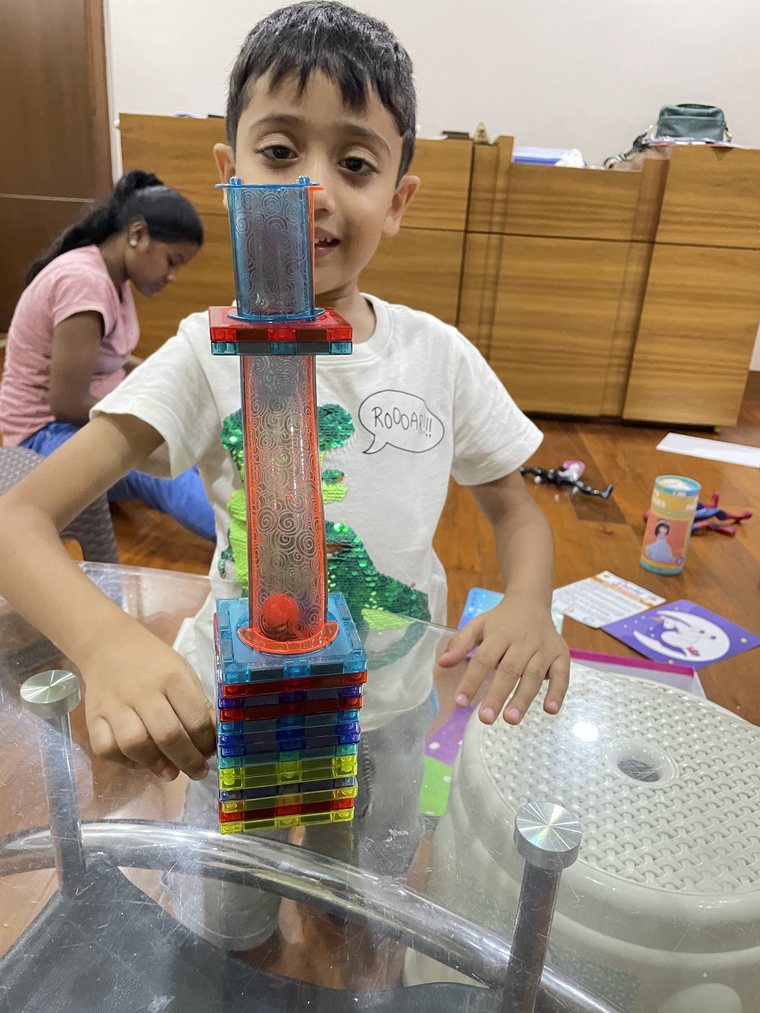
My son is eight. He can sit and read English comics and books for hours — fully gone into them, in his own world. He will build with Lego for hours the same way. Earlier it was colouring — for hours, and his colouring was perfect.
And when it was not perfect, he would throw a tantrum. For a long time my wife and I did not understand it. Why so much crying over a colour going slightly outside a line? We thought he was being difficult.
He was not. That is exactly what giftedness looks like. He knew, in his own head, how good it could have been — and falling short of his own standard hurt him. The tantrum was not bad behaviour. It was a gift we had not learned to read yet.
Why the deep focus and the tantrum are the real clues
Two of these signs get misread the most, so let me be clear about them.
The deep focus. A gifted child will give hours of still, total attention to the one or two things that grip them — reading, building, drawing, taking the radio apart. People mistake this for "he only does what he likes." But that long, absorbed focus is the engine of a gifted mind. The answer is not to pull them away from it. It is to feed it.
The perfectionism. The child cries because their inner standard runs ahead of their small hands. They can see the perfect result; they just cannot make it yet. To us it looks like a tantrum over nothing. To them it is the gap between what they imagined and what they managed — and that gap genuinely hurts. Understanding this one thing changes how you respond to it.
The thin skin in public. A gifted child carries a big but fragile sense of self. Correct them quietly and they cope. But criticise them in front of guests, relatives or other children — and something breaks. They feel exposed and judged, and they react in a way that looks far bigger than the issue. It is not arrogance. It is a strong sense of who they are, bruised in front of an audience. Save your corrections for a private moment, and you protect both the lesson and the child.
The most important caution: gifted is not the same as topper
This is where India loses its gifted children. We assume the gifted child must be the class topper — the obedient one with the trophy. Many gifted children are not.
Some hide their ability to fit in. Some score average because the exam rewards memorisation and speed, not deep thinking, and they quietly switch off. Some are called "troublemakers" because they question the teacher. The report card measures obedience and recall. It does not measure the mind. So a marks-only system, by design, cannot see most gifted children at all.
I know this because I was one of those children. I had decided I could not memorise — yet I knew the number of every car and scooter in my colony, and which house each belonged to. My memory was sharp. It was simply busy with the things no exam ever asked about. Nobody had the word for it, so I grew up thinking something was wrong with me.
What to do next
You do not need to rush to a test. Start by changing what you watch. Stop asking only "how much did you score?" and start watching how your child's mind moves — what they notice, what they ask, what they lose themselves in for hours.
Then do three simple things. Believe them — their intensity and their perfectionism are real, not drama. Feed the interest — give the books, the Lego, the questions, the time. And if you want certainty, get a proper assessment: a professional evaluation (often a WISC-V from around age eight, alongside observation and work samples) can confirm giftedness and guide the right support.
The goal was never to label a child. It is to understand them early — so they never grow up, as so many of us did, believing the gift was a problem.
Frequently asked questions
Is a gifted child the same as a class topper?
No. Many toppers are hard-working "bright" children, and many gifted children score average marks or are even called troublemakers. Giftedness is about how the mind works — depth, intensity, original thinking — not about the report card.
My child is clearly intelligent but scores average marks. Can he still be gifted?
Yes. Underachievement is very common in gifted children, especially in exam-driven systems that reward memorisation and speed over thinking. A bored gifted child often disengages and scores below ability.
At what age can you tell if a child is gifted?
Early signs — advanced speech, intense curiosity, deep focus — can appear by ages 2 to 4. A clearer picture usually forms around ages 6 to 8, when a formal assessment such as the WISC-V can be used if you want certainty.
Do I need an IQ test to know?
Not to begin. Careful observation of the signs comes first. A professional assessment can then confirm giftedness and guide the right support if you want a definite answer.
Why does my gifted child throw tantrums when something isn't perfect?
Because their inner standard is higher than their hands can yet manage. They can see how good the result should be, so an imperfect drawing or build feels like failure. This perfectionism is a normal part of giftedness — not bad behaviour.
Why does my gifted child get so upset when I correct him in front of others?
Gifted children often have an intense, fragile sense of self. Being criticised or discussed negatively in front of outsiders feels like public exposure and judgement — even when it is mild, and even when they are very young. It is not arrogance; it is a sensitive self-image. Correcting them privately, away from an audience, usually works far better.
Why is my gifted child so good at bargaining and "emotional blackmail"?
Because they understand cause and effect — and people — earlier than most. Knowing exactly what they want and negotiating hard for it is a sign of a strong, strategic mind, not bad character. It needs gentle, firm boundaries, not punishment.
Do gifted children really need less sleep?
Many do. Gifted children often have high physical energy and can manage on less sleep than other children their age, as if their bodies are keeping up with their busy minds. It varies child to child, but unusually high energy with reduced sleep is a pattern many parents of gifted children notice.

Kunwer Sachdev — known as the Inverter Man of India and the Solar Man of India. Founder of Su-Kam, holder of 106 technology filings, mentor to Su-vastika and other technology companies, and founder of Kunwwer.ai. Identified as gifted at 47 — the discovery behind GiftedKids.in. Read his story →
Sources & further reading
- Identification overview: Is My Child Gifted? — Davidson Institute
- India context: Gifted child in India: signs, parent support & expert guidance
- More on gifted education: National Association for Gifted Children (NAGC)
— Kunwer Sachdev, Founder, GiftedKids.in | June 2026