Source
Source: Plain-language digest of Identification and Mentoring Gifted Children Age 3–15 Years (with special focus on Maths and Science) (NIAS Report R37-2016), by Anitha Kurup, Jyothi Sarma, Ajith Basu, and Ajay Chandra. Published by the National Institute of Advanced Studies (NIAS), Bengaluru.
Read the report: PDF on NIAS ePrints
Programme home: NIAS — Education for the Gifted and Talented (EGT)
Also see: NIAS-EGT on GiftedKids.in
Further reading: NIAS ePrints record · Agastya International Foundation
GiftedKids.in is not NIAS. We share this research so Indian parents and teachers can use it. Words below are a plain-language digest, not a substitute for the full report.
How to use this checklist
Tick items you see repeatedly, across settings (home and school), over weeks—not once during exam week. One or two ticks do not “prove” giftedness. A dense pattern that stands out compared with age peers is a reason to observe more carefully and seek enrichment or professional guidance if needed.
Ages in the report span 3–15, with special focus on maths and science—but many behaviours show in language, social insight, or creative work too.
Example (illustrative)
Composite vignette — not a real child from the NIAS report.
A Class 5 teacher’s notebook: “Aarav finishes maths sheet in 8 minutes → asks if we can try the reverse problem → helps two classmates → then stares out of the window.” Alone, none of those ticks “prove” giftedness. Seen every week for a month, they are exactly the kind of pattern this checklist is for — depth and pace, not one exam rank.
Learning & thinking
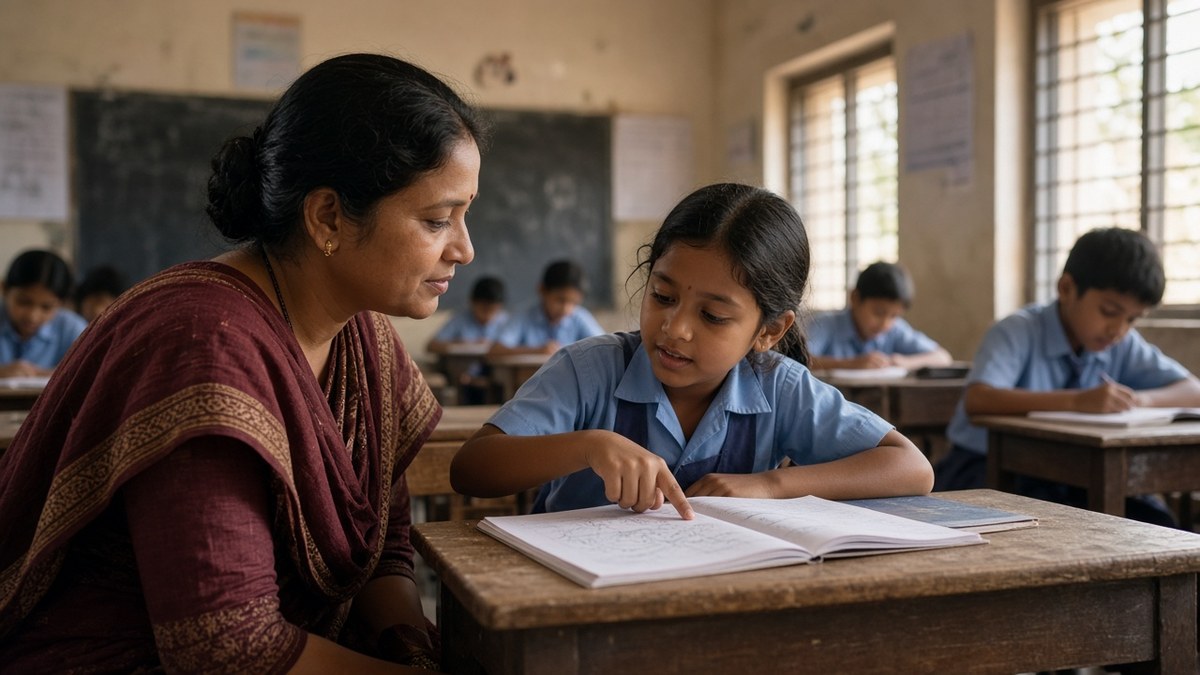
- Grasps new ideas quickly; needs less repetition than classmates
- Learns by watching others and then doing independently
- Deep, lasting interests (not only “hobby of the week”)
- Strong concentration when the task is meaningful
- Remembers details with unusual depth; connects old learning to new
- Asks “why” and “what if” beyond the lesson plan
- Explores, experiments, notices patterns others miss
Persistence, emotion & social signals
- Sticks with hard problems when interested; goal-directed
- Shows empathy or unusual interpersonal sensitivity
- Leadership or social skill that stands out among peers—or prefers older company / adult conversation
- Strong sense of fairness or moral concern for their age
- Can self-regulate when engaged (not the same as “always obedient”)
Language & expression (where relevant)
- Large vocabulary / early or avid reading
- Explains ideas with unusual clarity or precision for their age
Delhi-oriented “potential” cues (science & maths contexts)
The Delhi chapter lists traits often seen in varied situations—useful prompts, not a scorecard:
curiosity · objectivity · intuition · attentiveness · keen observation · compassion · closeness to nature · creative energy · divergent thinking
Ask: when does this child show these—in class discussion, on a walk, during a science activity, while arguing a point?
Process checklist (school & family)
Use the report’s multi-stage mindset:
- Notice & nominate — Who stands out to teachers, parents, peers?
- Gather evidence — Work samples, questions asked, projects, observation notes.
- Widen the lens — Don’t stop at marks; include behaviour and creative problem-solving.
- Seek challenge — Enrichment, mentoring, clubs, university/NGO links—not only more tuition.
- Include the overlooked — Rural, first-generation, and linguistically different learners.
- Plan continuity — Mentoring and enrichment over time, not a one-day “gifted camp” photo.
Example (illustrative)
Composite vignette — not a real child from the NIAS report.
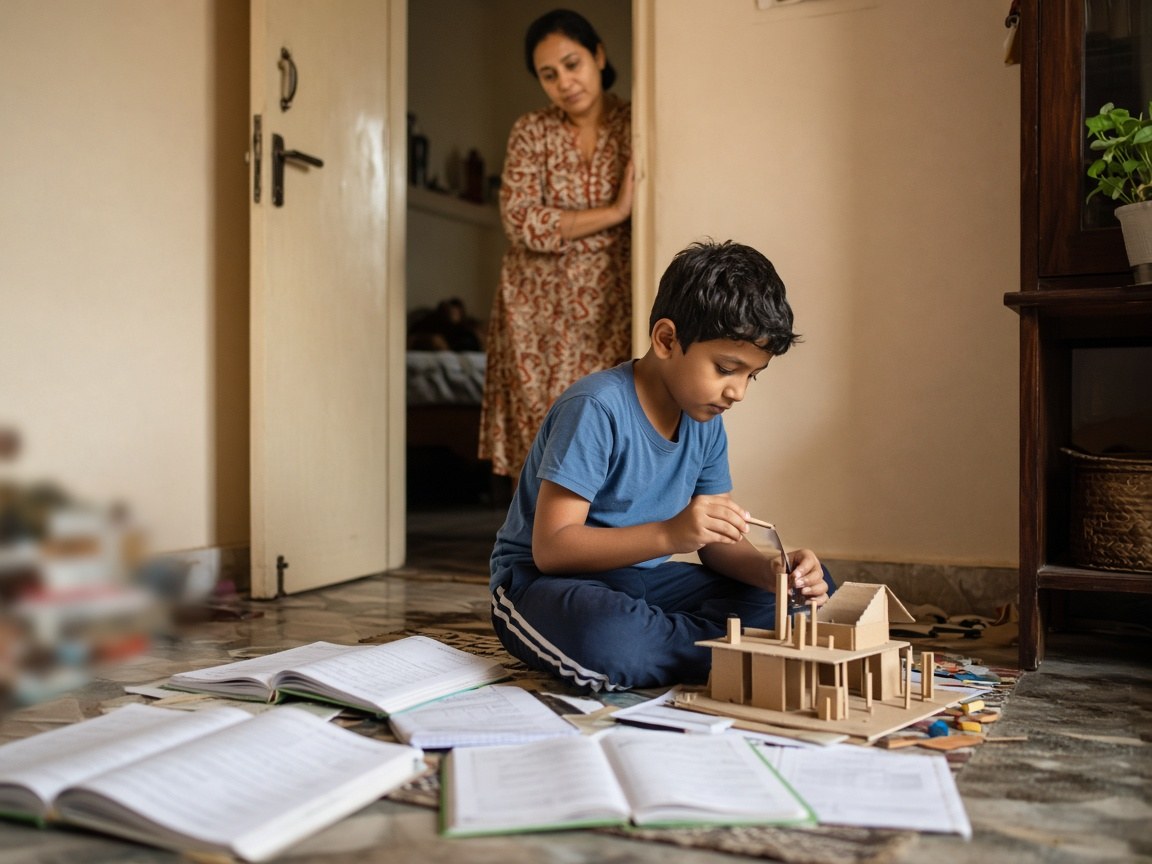
Diya’s mother stands in the doorway: the living-room floor is covered with a half-built bridge of books and sticks; Diya has been at it for three hours and forgot lunch. School calls her “distractible.” At home the same focus looks like giftedness of attention. The process checklist says: write it down, share it with the teacher, ask for challenge — don’t only buy another tuition.
What this checklist is not
- Not an IQ test
- Not a medical or psychological diagnosis
- Not permission to pressure a child into endless coaching
- Not a claim that GiftedKids.in or NIAS has assessed your child
If concerns include distress, school refusal, or possible twice-exceptional needs, seek a qualified professional. For India-rooted programme context, see NIAS-EGT.