Ask any Indian parent to point to a gifted child. They will point to the topper. The one with the trophy. The one whose marks get read out at the assembly. The one whose photo goes up in the WhatsApp group.
But that is only one kind of gifted child. There are six. And in our homes and our schools, five of them are walking around unnoticed every day.
The framework comes from two researchers, George Betts and Maureen Neihart. They studied gifted children for years and found that giftedness does not wear one face. It wears six. Here they are, in plain words — and here is why, in India especially, we keep missing five of them.
1. The Successful
This is our beloved topper. She has cracked the code. She knows what the teacher wants, gives exactly that, and collects the marks. Everyone is proud.
But here is the quiet danger. She is learning to perform, not to think. She waits to be told what to do. Slowly the curiosity dims. By the time she reaches a place with no syllabus and no "correct answer," she is lost. We celebrated her so much that we forgot to ask if she was still excited about anything.
2. The Challenging (the creative one)
This child asks "but why?" one too many times. He argues. He questions the teacher. He has a better way to do everything and he will tell you so. In an Indian classroom, this child has a label ready and waiting: "troublemaker." "Badtameez." "Over-smart."
We punish him for the exact thing that makes him gifted. His mind refuses to sit quietly in a row. And when no adult understands that, he learns that being bright and being in trouble are the same thing.
3. The Underground
This one breaks my heart the most. Usually it is a girl around middle school. She is sharp. She knows the answer. But she has noticed something: standing out has a cost. So she hides it. She stops raising her hand. She dims herself down to fit in, to keep her friends, to not be "the show-off."
In a culture that already tells girls to be modest and quiet, the gifted girl simply disappears into the background. On purpose. And we let her, because a quiet child causes no trouble.
4. The Dropout (the at-risk one)
This is what happens when a child's needs go unmet for years. Nobody saw the questioner, nobody saw the hider. So the anger built up. The child checked out. He sits at the back, hurt and bored, and decides school is not for him. By the time we notice, he looks like a "failure," and we blame the child.
We rarely ask the harder question: how many of our "failed" students were actually gifted children we ignored until they gave up?
5. The Twice-Exceptional
Gifted and living with a difference. Dyslexia. ADHD. Anxiety. A physical challenge. This is the child we miss the most, because the two halves hide each other. The giftedness covers up the struggle, so no one gives support. The struggle covers up the giftedness, so no one sees the brilliance.
In India, where learning differences are still whispered about or denied altogether, this child is doubly invisible. Twice gifted, twice unseen.
6. The Autonomous Learner
And then there is the one we are all hoping for. This child is independent. Secure. Self-driven. She learns because she wants to, not because of marks or fear. She does not wait for permission. She creates change in her own life.
This is the healthy one. This is the goal. Not the topper. This.
A small confession
As a kid, I never looked unsure. But inside, I was. I had questions — plenty of them — but they stayed inside my head, because at home and at school there was no place for them. Asking too much was not curiosity. It was bad manners. So I learned to keep quiet.
I had also decided one thing about myself: I cannot memorise. That was my story. I believed it for years. And all that while, I could whistle any Hindi film song after hearing it once. I knew the number of every car and scooter in my colony — which one belonged to which house. My memory was sharp. It was just busy with the things no exam ever asked about.
Nobody told me that was a gift. So I grew up thinking I didn't have one.
And it does not stop at childhood
In India, the silence around questions is not one moment. It is a chain. It starts at home. In low-income and lower-middle-class homes, where life is already a daily fight, "why" is a luxury nobody has time for. Sometimes it is just one parent who does not like it, and that is enough to close the door.
Even our faith often teaches us to accept, not to ask. To have shraddha. To not question what is given.
And then you grow up, finish your studies, join an organisation — and find the same rule waiting. Most workplaces in India do not want your questions either. Keep your head down. Do the work. Don't challenge.
So the gifted child who swallowed his questions at six becomes the adult who swallows them at sixty. The chain never breaks. It just changes address. This is not only a parenting issue. It is a culture we hand down without meaning to.
But the gift does not die. It finds its own way.
When you stop a gifted child from asking, he does not stop learning. He just finds his own way. I could not ask. So I opened things instead. I opened the radio at home. I opened the TV. I took them apart to understand them in my own way. I had no interest in textbooks. I read Hindi novels, like any other boy who had never travelled and had no other window to the world.
And then life gave me the window. Geography was a nightmare for me in school — just names and maps to mug up. But when I started running Su-Kam and began travelling, geography became simple. I was standing in it. When I visited other countries and read their history there, on their soil, I was happy to learn it. When I wanted to understand my own inverter, I read physics — and I learned it fast.
That is when it hit me. When I wanted to learn, I learned quickly. When I was forced to learn, I did not learn at all.
This is the real secret of the gifted child. He needs a reason — a "why should I learn this?" Give him the reason, and he will learn anything, fast, in any field. He does not even need to become an expert overnight. What he needs is a live challenge in front of him. The day the challenge is solved, his interest dies. A repeating, routine job is not his cup of tea. He is built to keep solving new problems, not to keep doing the same one. We did not need to push him. We only needed to give him a reason.
Why this matters for us
Look at the list again. Our schools reward only the topper. They punish the questioner for asking. And the hider, the dropout, the twice-exceptional do not even get a column on the report card. So we lose them — not because they were not gifted, but because gifted, to us, only ever meant marks.
A parent reading this can do something very simple. Stop asking only "How much did you score?" Start watching how your child's mind moves. Is she hiding? Is he angry? Is the quiet one quiet by choice? Is the struggling one also, somewhere, brilliant?
Because the goal was never to manufacture more toppers. The goal is the sixth child — the Autonomous Learner, curious, secure, and driving her own life. Every one of these six children can grow toward that. But only if we first agree to see all six.
Right now, we see one.
There is no single gifted child. There are six. The next time someone points to the topper and calls that "the gifted one," remember the other five sitting quietly in the same room — and ask who is seeing them.
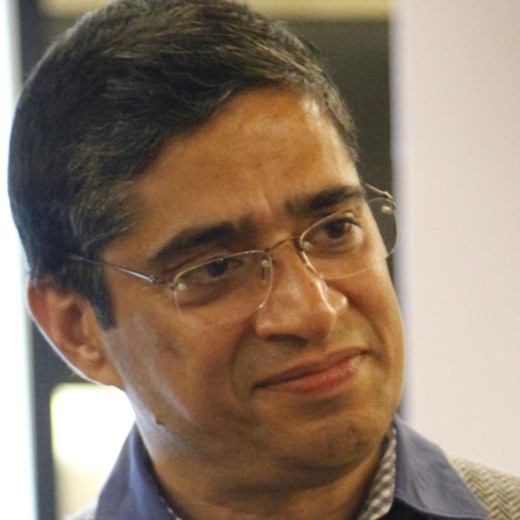
Kunwer Sachdev — known as the Inverter Man of India and the Solar Man of India. Founder of Su-Kam, holder of 106 technology filings, mentor to Su-vastika and other technology companies, and founder of Kunwwer.ai. Identified as gifted at 47 — the discovery behind GiftedKids.in. Read his story →
Kunwer Sachdev exited Su-Kam in 2019 and is not responsible for any activity of the company since. Full disclaimer →
Sources & further reading
The framework is the Six Profiles of Gifted and Talented, developed by George Betts and Maureen Neihart. The six profiles above are described here in my own words.
- Plain-language overview: The 6 Different Types of Gifted Students — Davidson Institute
- The original research: Betts & Neihart, "Profiles of the Gifted and Talented," Gifted Child Quarterly, 1988 — journal paper · ERIC record
- More on gifted education: National Association for Gifted Children (NAGC)
— Kunwer Sachdev, Founder, GiftedKids.in | June 2026