The short answer
Watch how your child focuses on something they truly love. A gifted child will disappear into it for hours — their attention is selective: deep on what grips them, gone the moment they are bored. A child with ADHD struggles to hold attention even on things they enjoy, because the difficulty is in how the brain regulates attention itself. And sometimes — more often than India realises — a child is both.
It is one of the most anxious questions a parent can ask: is my child gifted, or is this ADHD? The behaviour can look identical from the outside — restless, distracted, intense, finishing first or staring out of the window. But the two are very different, and in India, getting it wrong can quietly change the course of a child's life.
The one test that cuts through it
Forget the surface behaviour for a moment and look at focus. Put in front of your child the one thing they are passionate about — the books, the Lego, the drawing, the questions about how something works.
A gifted child locks in. They go still and absorbed for hours, lost in their own world. Their inattention only shows up when the task bores them — it is selective, not broken. A child with ADHD finds it genuinely hard to sustain attention even on what they love, because the brain keeps jumping. The focus slips out like water through their hands, no matter how much they want to hold it.
That single difference — selective deep focus versus a brain that cannot hold focus even on a passion — is the clearest tell.
Go deeper — the full breakdown
I have written a complete, side-by-side guide to how ADHD and giftedness differ across attention, learning and the emotional world. If you want the detailed comparison, read the companion piece on my personal blog: ADHD or Gifted? Here's How to Really Tell →
Why India gets this wrong so often
Here is the part that worries me most. In a crowded Indian classroom, a bored, under-challenged gifted child looks exactly like the textbook picture of ADHD — fidgety, talking, not paying attention, finishing the work and then "disturbing" others. The surface behaviour is the same.
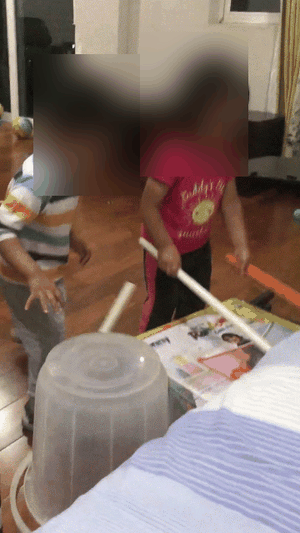
But our teachers are rarely trained to recognise giftedness, and the system wants a quick label. So the gifted child becomes the "troublemaker," or gets pushed toward a hurried ADHD diagnosis — sometimes straight to medication — when what they actually needed was a harder, more interesting challenge. On the other side, many Indian families still treat any mention of ADHD as shameful and deny a real, treatable condition. Both mistakes cost the child.
The child everyone misses: gifted AND ADHD
This is the most important thing in this article. A child can be both gifted and ADHD at the same time. These children have a name — twice-exceptional, or "2e."
And they are the easiest to miss, because the two halves hide each other. The giftedness lets them just about cope, so the ADHD is never spotted — "he's clever, he's just careless." Or the ADHD drags their marks down, so the giftedness is never seen — "he can't be gifted, look at his report card." In India, where neither label is understood well, the twice-exceptional child usually grows up simply called lazy, or difficult, or wasted potential. They were none of those things.
What to do as an Indian parent
Do not self-diagnose, either way. A teacher's comment or a quick internet checklist is not a diagnosis. Resist both the rush to medicate and the urge to deny.
Observe first, calmly. Use the focus test. Notice whether the inattention is everywhere, or only when your child is bored. Watch the emotional pattern — gifted distress usually points outward at unfairness and meaning; ADHD distress is more reactive and harder to regulate.
Then get a proper assessment. If the question is serious or it is affecting daily life, see a qualified professional — a developmental paediatrician, a child psychologist, or a psychiatrist — who can assess for both giftedness and ADHD. This is exactly the kind of careful, dual evaluation our co-founder, Dr. Inderbir Kaur Sandhu, has spent her career on. Knowing the real reason is how you find the right help — and the right help for a gifted child, an ADHD child, and a 2e child are three different things.
The goal is never to slap on a label. It is to understand the child early enough that they never grow up believing, as so many of us did, that something was simply wrong with them.
Frequently asked questions
What is the simplest way to tell gifted from ADHD?
Watch their focus on something they truly love. A gifted child locks in for hours but switches off when bored — attention is selective. A child with ADHD struggles to sustain attention even on things they enjoy, because the difficulty is in the brain's regulation of attention itself.
Can a child be both gifted and ADHD?
Yes — they are called twice-exceptional, or "2e." The giftedness can mask the ADHD and the ADHD can mask the giftedness, so these children are among the most often missed, especially in India.
Why are gifted children in India often misdiagnosed as ADHD?
A bored, under-challenged gifted child in a large classroom looks restless and inattentive — the same surface behaviour as ADHD. With little teacher training in giftedness and pressure for quick answers, they are often labelled troublemakers or misdiagnosed instead of being recognised and challenged.
Should I put my child on medication if I think it is ADHD?
Not on your own judgement. ADHD is a clinical diagnosis that needs a qualified professional using proper assessment. Boredom-driven behaviour in a gifted child will not be fixed by medication — a thorough evaluation comes first.
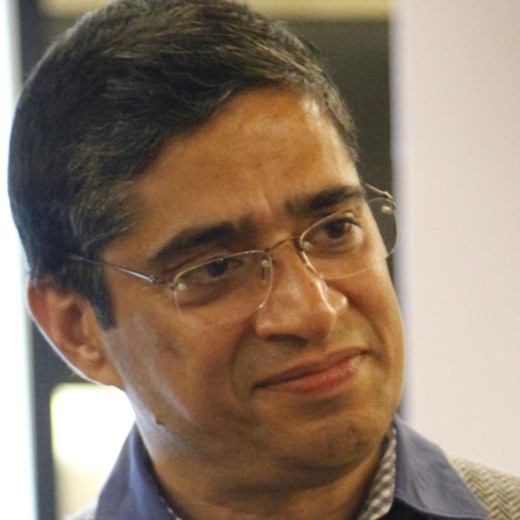
Kunwer Sachdev — known as the Inverter Man of India and the Solar Man of India. Founder of Su-Kam, holder of 106 technology filings, mentor to Su-vastika and other technology companies, and founder of Kunwwer.ai. Identified as gifted at 47 — the discovery behind GiftedKids.in. Read his story →
Sources & further reading
- Companion guide: ADHD or Gifted? Here's How to Really Tell — Kunwer Sachdev
- Research: Gifted, ADHD, or Both? — Davidson Institute
- More on gifted education: National Association for Gifted Children (NAGC)
— Kunwer Sachdev, Founder, GiftedKids.in | June 2026